
How to Hire a Deck or Porch Contractor in 2026 — No Phone Tag, No Lead Fees, and Transparent Pricing
Your backyard oasis shouldn’t start with endless calls, vague estimates, and surprise bills. Here’s the definitive guide to getting a high‑quality deck or…
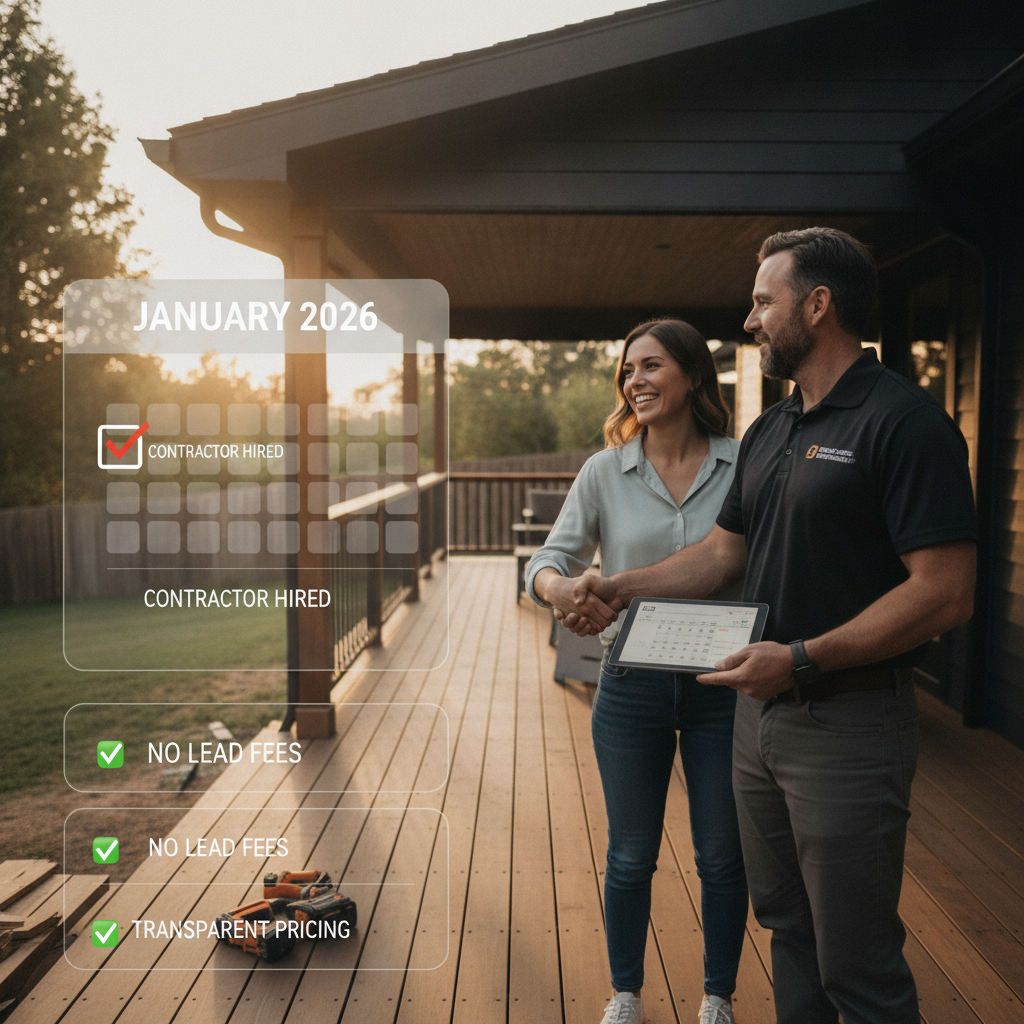
Your backyard oasis shouldn’t start with endless calls, vague estimates, and surprise bills. Here’s the definitive guide to getting a high‑quality deck or porch—fast, clear, and safely paid for—using the AI‑native workflow that’s reshaping home‑service hiring.
Introduction
You’ve finally decided to add a deck to your New York City townhouse or replace a cracked porch on your Boston home. The vision is clear, but the hiring process? Not so much. A recent Home Service Customer Service Report (2025) found that 68 % of homeowners cite “too many phone calls” as their biggest frustration when trying to book a contractor.
Add to that the 12‑18 % year‑over‑year rise in lumber and composite decking costs reported by the NAHB Materials Index (2025), and you’ve got a recipe for budget blow‑outs if you can’t lock in a line‑item quote early.
Even worse, the traditional pay‑per‑lead platforms that dominate the market (Angi, Thumbtack, HomeAdvisor) charge contractors $50‑$150 per lead and still deliver ≈38 % dead leads that never turn into a booked job. 73 % of deck‑contractors say they’ve quit those platforms because of wasted ad spend and ghosting (Reddit & Facebook complaints).
The result? Homeowners chase phantom contractors, and contractors waste money on leads that never materialize.
Enter PLMBR—an AI‑native home services workflow and payments platform that replaces the broken lead‑gen model with a transparent, escrow‑backed, quote‑comparison engine. Below you’ll learn everything you need to know about deck and porch projects, how to vet providers without getting burned, where the old workflow collapses, and exactly how PLMBR fixes those pain points.
What Homeowners Need to Know About Decks & Porches
- Scope matters more than square footage – A 300‑sq‑ft deck built with pressure‑treated lumber differs dramatically from a 300‑sq‑ft composite deck in terms of material cost, maintenance, and lifespan.
- Permits are mandatory in most cities – NYC, Boston, and Philadelphia require a building permit for any structure over 100 sq ft. Failure to obtain one can lead to fines or forced removal.
- Design choices drive cost – Railing style, built‑in lighting, and multi‑level configurations add 15‑30 % to the base price.
- Seasonality affects timelines – In the Northeast, the prime construction window runs from late April to early October; starting too early can cause weather‑related delays and extra labor costs.
Understanding these variables up front lets you evaluate quotes more intelligently and avoid “scope creep” later on.
Cost / Risk / Hiring Reality
| Item | Typical Cost Range (2024‑2026) | Key Risk Factors | How PLMBR Helps |
|---|---|---|---|
| Standard wood deck (pressure‑treated) | $12,000 – $25,000 | Lumber price volatility (↑12‑18 % YoY) | AI‑generated line‑item pricing reflects current market rates |
| Composite deck (high‑end) | $25,000 – $45,000 | Higher material cost, longer lead times | Transparent quote comparison prevents hidden mark‑ups |
| Porch remodel (incl. permits) | $8,000 – $30,000 | Permit fees, structural inspections | PLMBR stores verified permits in the provider’s compliance profile |
| Progressive billing (milestones) | 0 % – 30 % upfront | Cash‑flow strain for large projects | Stripe escrow holds funds until each milestone is verified |
| Lead‑fee (competitor platforms) | $50 – $150 per lead | Dead‑lead rate ≈38 % | PLMBR charges no lead fees; you only pay for qualified jobs |
Scroll to see all columns →
Pro‑Tip: When evaluating a quote, ask for a breakdown that includes materials, labor, permits, and contingency. Anything missing is a red flag.
How to Vet Providers Without Getting Burned
- Check Licensing & Insurance – In New York and Massachusetts, contractors must hold a valid Home Improvement Contractor (HIC) license and up‑to‑date liability insurance. PLMBR’s compliance dashboard automatically verifies expiration dates.
- Read Structured Reviews – Unlike generic star ratings, PLMBR’s booking packets embed homeowner feedback on each line‑item (e.g., “material quality”, “on‑time completion”).
- Confirm Portfolio Relevance – Look for recent projects that match your desired deck style, material, and size.
- Validate Payment Safeguards – Ensure the platform uses an authorize‑and‑capture escrow flow (Stripe Connect) that releases funds only after you confirm completion.
- Ask the Right Questions – (See the “Questions To Ask Before Hiring” section for a ready checklist.)
By focusing on these objective data points rather than salesy phone pitches, you eliminate the guesswork that fuels the pay‑per‑lead nightmare.
Where the Old Workflow Breaks
| Step | Typical Failure on Pay‑Per‑Lead Platforms | Homeowner Pain | Contractor Pain |
|---|---|---|---|
| Lead Generation | Paid per lead, low conversion, dead leads | You pay for a “lead” that never contacts you | You spend $100+ on a lead that never books |
| Initial Contact | Phone tag, missed calls, unresponsive inboxes | Hours wasted chasing replies | Administrative drag, lost productivity |
| Quote Creation | Hand‑written estimates, vague scope, “ball‑park” numbers | Surprise cost overruns | Re‑negotiation after work starts |
| Payment | Up‑front payment, no escrow, risk of fraud | Funds released before work is done | Cash‑flow pressure, disputes over quality |
| Dispute Resolution | Manual, time‑consuming, no central thread | Endless email chains, unclear evidence | Lost time defending claims |
Scroll to see all columns →
These breakdowns are why 68 % of homeowners and 73 % of contractors are actively seeking alternatives. The core issue is a fragmented workflow that forces both sides to juggle phones, emails, and spreadsheets while the actual construction work sits on the sidelines.
How PLMBR Changes This Workflow
1. Conversational AI Intake
- What happens: You describe your deck issue in plain English, upload photos, and the AI instantly identifies the trade, urgency, and any missing info (e.g., “Do you have a permit ready?”).
- Benefit: Eliminates the initial back‑and‑forth; you get matched to qualified providers in seconds.
2. Semantic Search & Matching
- Using vector embeddings, PLMBR surfaces the top‑fit contractors based on trade, location, availability, ratings, and verified compliance—no keyword guesswork.
3. Booking Packet Builder (AI‑Generated)
- The platform converts the conversation into a structured quote with line‑item pricing, material specs, timeline, and terms.
- Internal pilot data shows AI‑generated packets are within ±5 % of the final contractor price — saving you hours of back‑and‑forth.
4. Compare‑Packets View
- Side‑by‑side comparison lets you see exactly how each provider’s scope, price, and timeline differ. No more “$10k–$15k vague estimate”.
5. In‑Context Messaging & Agent Coordination (Premium)
- An AI Seeker Agent reaches out to multiple providers simultaneously, tracks each response, and surfaces follow‑up questions directly in the chat thread. You never chase a silent contractor again.
6. Transparent, Escrow‑Backed Payments
- Funds are authorized via Stripe but captured only after you confirm work completion. For large projects, you can set milestone payments (e.g., 30 % after framing, 70 % after finish).
7. AI‑Mediated Dispute Resolution
- If a disagreement arises, the system aggregates evidence (photos, messages, packet terms) and offers tiered resolution recommendations—cutting the time to settle a dispute from weeks to days.
8. Zero‑Dead‑Lead Guarantee for Contractors
- Providers only see homeowners who have a qualified, verified job. No per‑lead fees, no wasted marketing spend.
In short, PLMBR turns a chaotic, multi‑tool process into a single, AI‑driven workflow that protects both your budget and your peace of mind.
Questions to Ask Before Hiring
- Licensing & Insurance – “Can you provide a current copy of your HIC license and liability insurance?”
- Permits – “Will you handle the building permit, and can I see the approved plans?”
- Scope Definition – “What specific materials (brand, grade) are included, and can you list them line‑by‑line?”
- Timeline & Milestones – “What are the key project milestones, and when will payments be due?”
- Warranty & Post‑Build Support – “Do you offer a warranty on materials and workmanship? How do I file a claim?”
- References – “Can you share two recent deck projects similar in size and material?”
Having these answers in the booking packet ensures you’re comparing apples‑to‑apples across providers.
Conclusion
Hiring a deck or porch contractor in 2026 doesn’t have to feel like navigating a maze of phone calls, vague estimates, and hidden fees. By understanding the true cost drivers, vetting providers with concrete data, and avoiding the broken pay‑per‑lead model, you can protect your budget and enjoy a smoother build experience.
PLMBR delivers that solution—an AI‑native workflow that gives you structured, side‑by‑side quotes, escrow‑backed payments, and an automated agent that does the chasing for you.
Ready to see the difference for yourself?
- Visit the PLMBR homepage to explore the platform.
- Find Decks & Porches pros on PLMBR in your city (NYC, Boston, Philadelphia, and more).
- Compare quotes on PLMBR and lock in a transparent, line‑item price before any work begins.
- For more home‑service guides, head to our blog.
Your dream deck is just a few clicks away—no phone tag, no lead fees, just clear, trusted, AI‑powered hiring.
Sources
- Home Service Customer Service Report (2025) – 68 % of homeowners cite phone tag as top pain point
- NAHB Materials Index (2025) – Lumber & composite decking up 12‑18 % YoY
- GigNGo vs Angi 2026 – Honest Comparison – Lead fees $50‑$150, 38 % dead leads
- Contractor Lead Fee Complaints US (Facebook) – 73 % of deck contractors quit pay‑per‑lead platforms
- NY State Dept. of Labor – Contractor Licensing Updates (2024) – Real‑time license verification requirements
External References
- National Association of Home Builders (NAHB) – Materials price trends.
- U.S. Department of Labor – Contractor Licensing – Licensing requirements for deck work in NY.
- Better Business Bureau – Angi Reviews – Trustpilot rating and consumer complaints.
- This Old House – Deck Building Guide – Best practices for deck design and permitting.